
The advice side of carehome.co.uk is where somebody chooses a care home for a parent for the first time, on a directory funded by the homes they're comparing. The site's own advertising pages state that over 40% of UK care homes subscribe to a paid tier.
People reach these pages at a bad moment. A parent is leaving hospital, or a dementia diagnosis has just landed, and most have never chosen a care home before. Every home they go on to compare has paid to be listed. The advice still has to be worth acting on, and it has to look it.
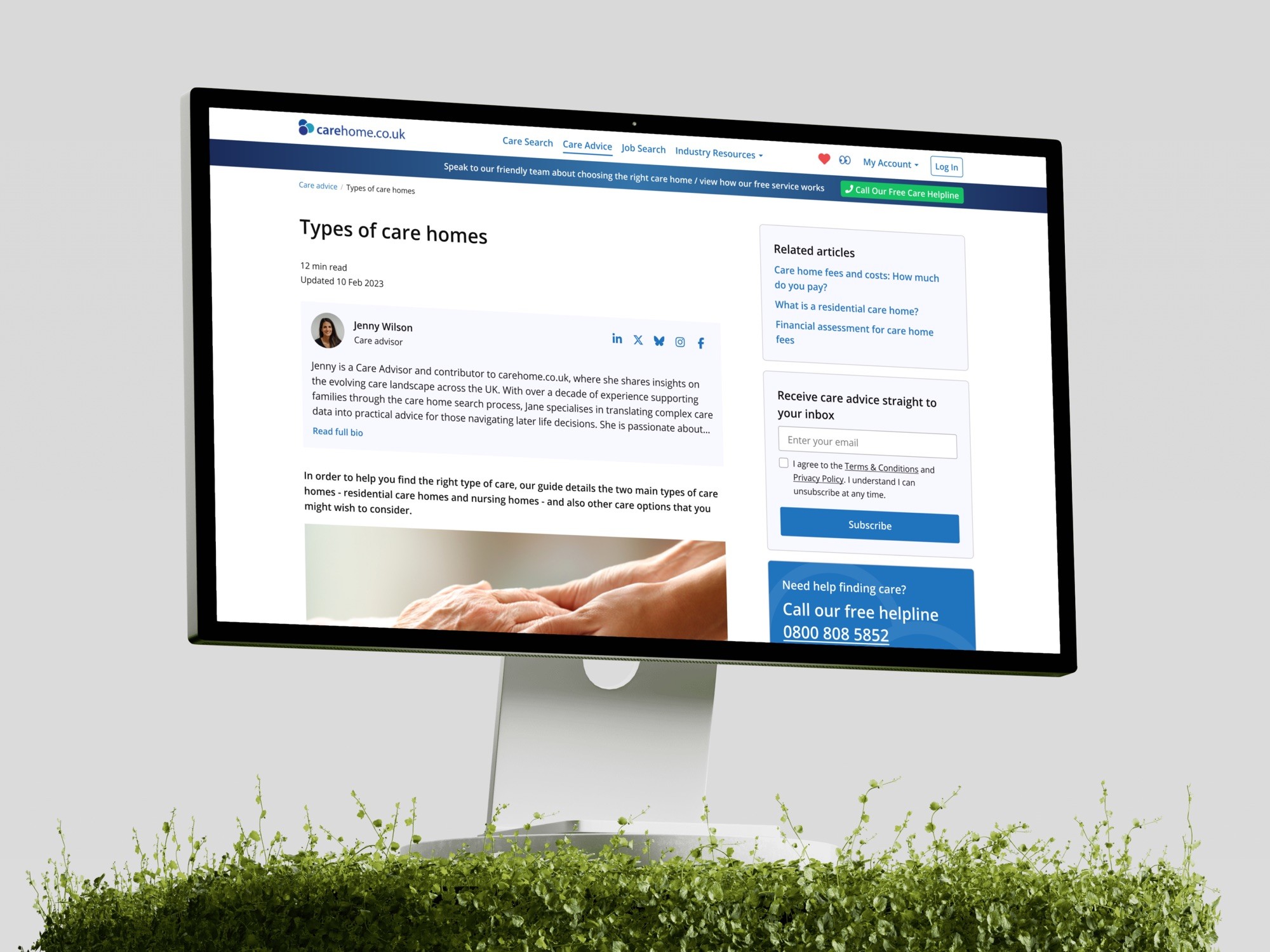
I ran stakeholder interviews across editorial and sales, the two halves of one business sharing a domain, and built an advice information architecture of thirteen topics running from paying for care through to end of life, browsable and searchable. The article template is where the disclosure lives: a named care advisor with a bio you can check, the date the page was last updated and the reading time, all before the first paragraph. The free helpline sits in the header of every page rather than at the end of the article, because someone who needs to speak to a person shouldn't have to finish reading first.
Ad inventory was fixed at module-placement stage, before any layout existed, so adverts sit beside the reading column or between whole sections and never inside a paragraph about end-of-life care. Settling that early was the only way to stop it being renegotiated page by page later, once the pressure is commercial and the page is already built.
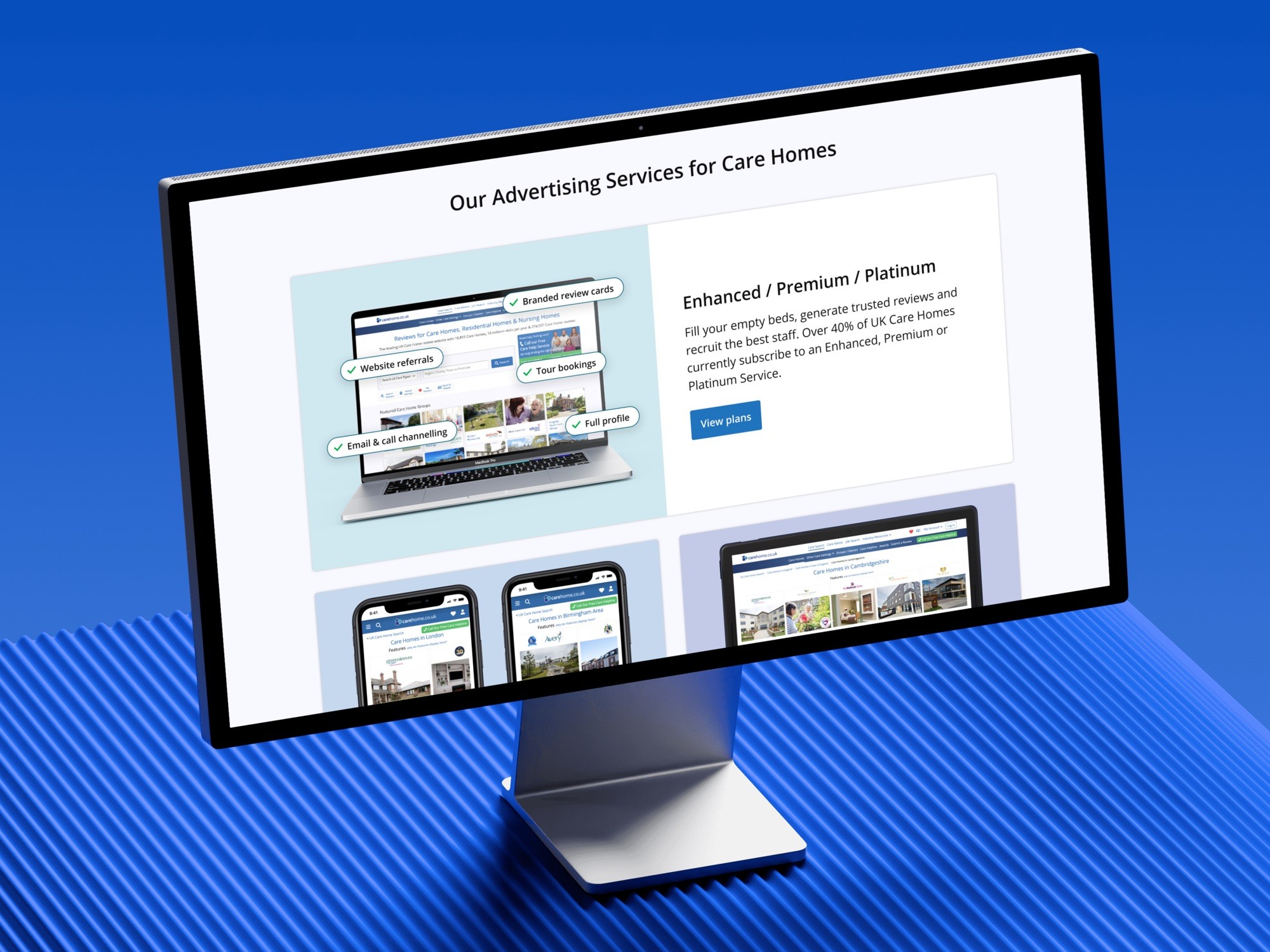
The advice hub, the article template and the operator-side advertising pages all shipped, and three brands moved onto one platform without losing organic traffic. Editorial now publishes without waiting on a platform release.