
CEPA
CEPA is a transatlantic policy institute with years of articles, reports, events and expert profiles, and no shared way of categorising any of it. As Lead Product Designer I audited the archive, built the taxonomy and designed the search on top of its WordPress site.
The situation
349 results, no way to tell them apart
A search for one topic returned people, events, articles and PDFs in a single list. Four kinds of content had been published on the same subjects for years with no shared tags, so an expert, their article and the event where it was discussed had no route between them.
CEPA weren't buying a redesign. They were choosing who to hand an existing WordPress site to, and I was on the pitch.

How I worked it out
The archive first, then the people who tag it
The audit mapped four content types against the topics they covered. Then I ran two or three working sessions with the comms and editorial team, the people who tag and publish, and read the analytics and the SearchWP search logs.
There was no budget for user testing, so the evidence was the archive itself, the people who maintain it and what readers type.
Audit the archive
Four content types on the same subjects, with no shared tags.
Sessions with the editors
Two or three, with the comms team who tag and publish.
Read the search logs
What readers actually type into SearchWP.
Build the content model
Four types, one taxonomy across all of them.
Order the filters
Open what people use, collapse the rest.
What the editors told me
Tagging failed because it was tedious
Nobody was careless. Tagging cost more attention than it seemed worth, at the end of a day spent on something else.
So the test for the taxonomy became whether a busy editor applies it correctly on a Friday afternoon.
The taxonomy
Four issues, eighteen tags, every format
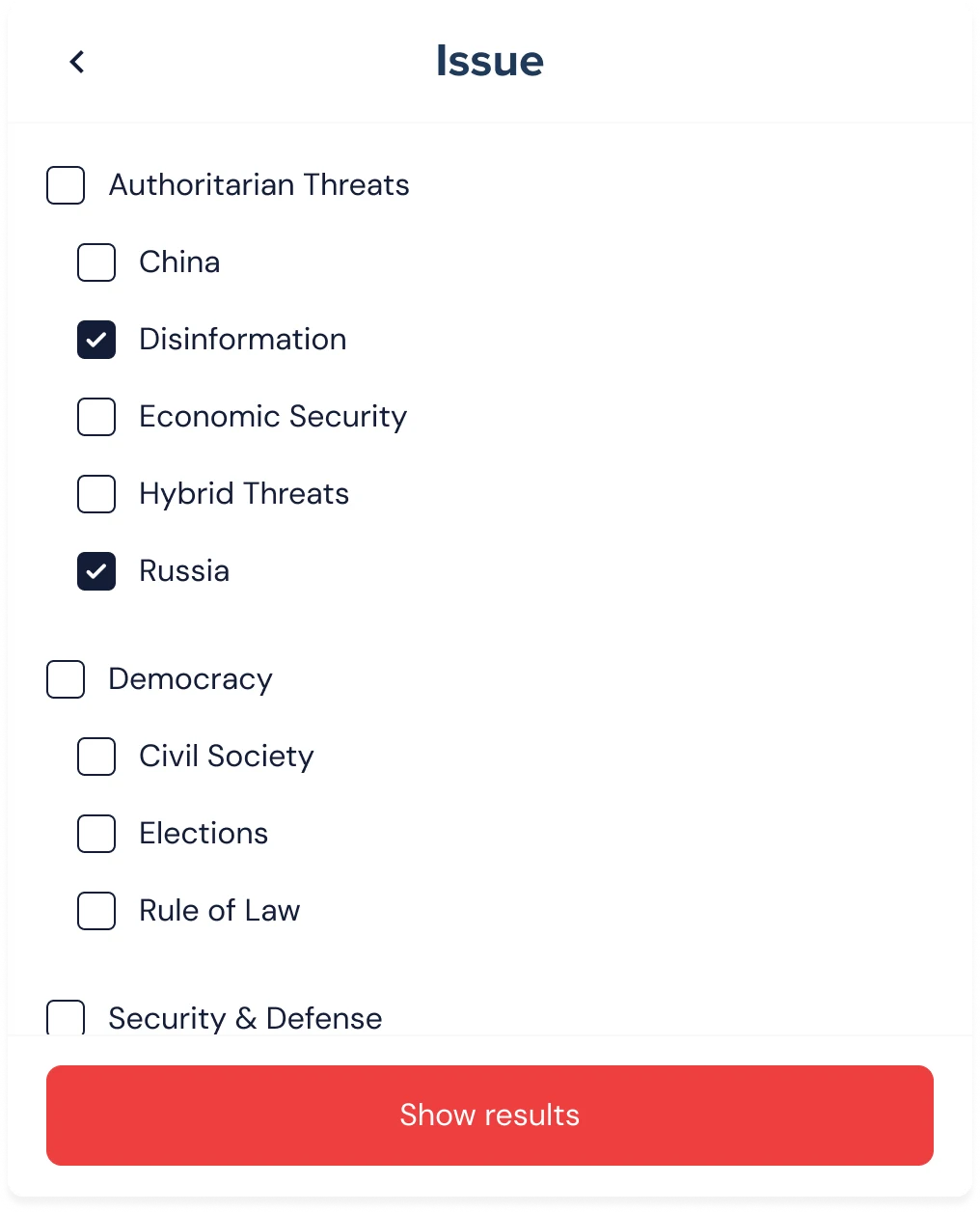
Four parent issues with eighteen tags beneath them, shared by analysis, reports, events and experts. Few enough for an editor to apply every time, and enough to tell the subjects apart.
One tag, every format: filtering to Hybrid Threats returns the analysis, the expert who wrote it and the event where it was discussed.
Decision
Which filters open first
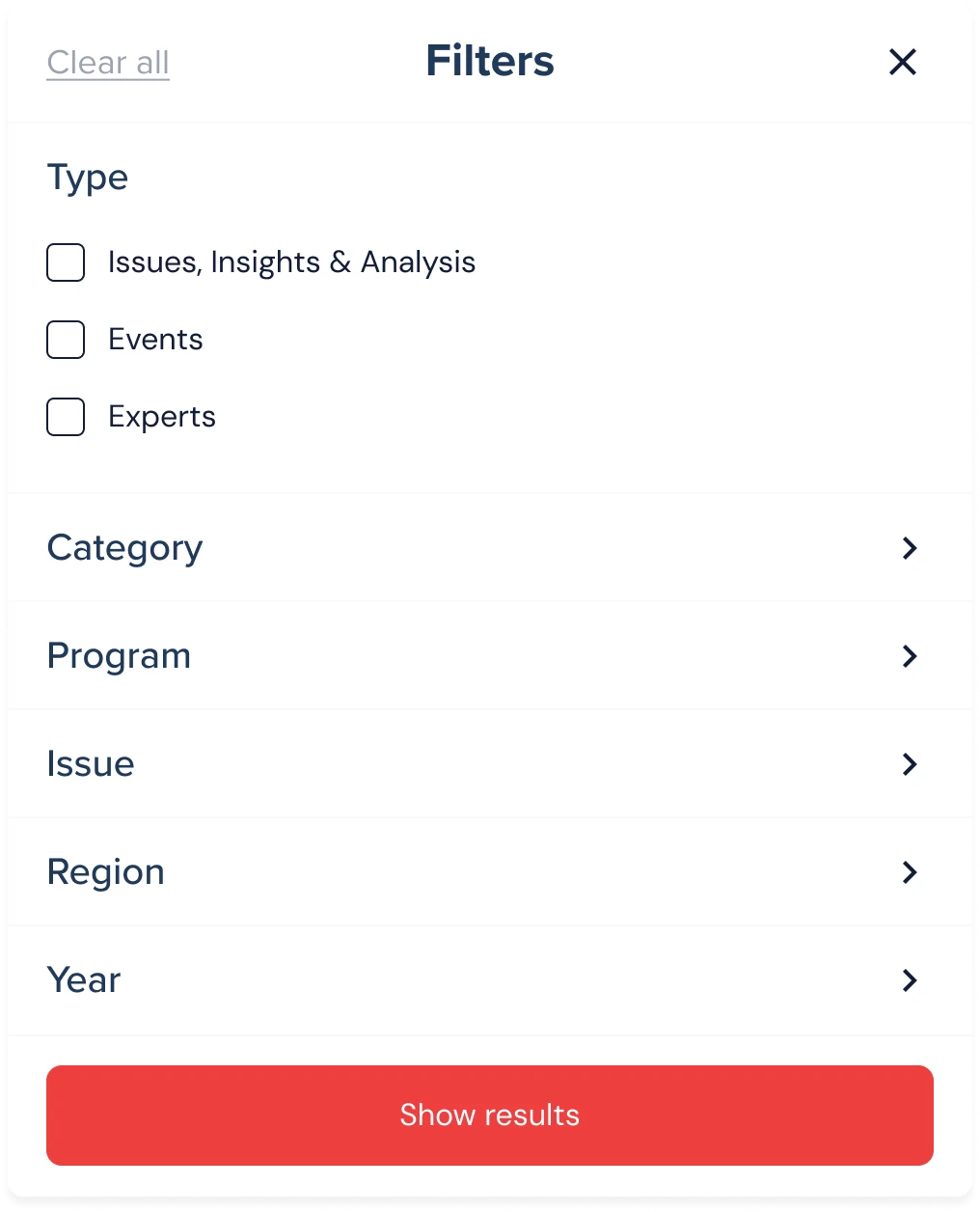
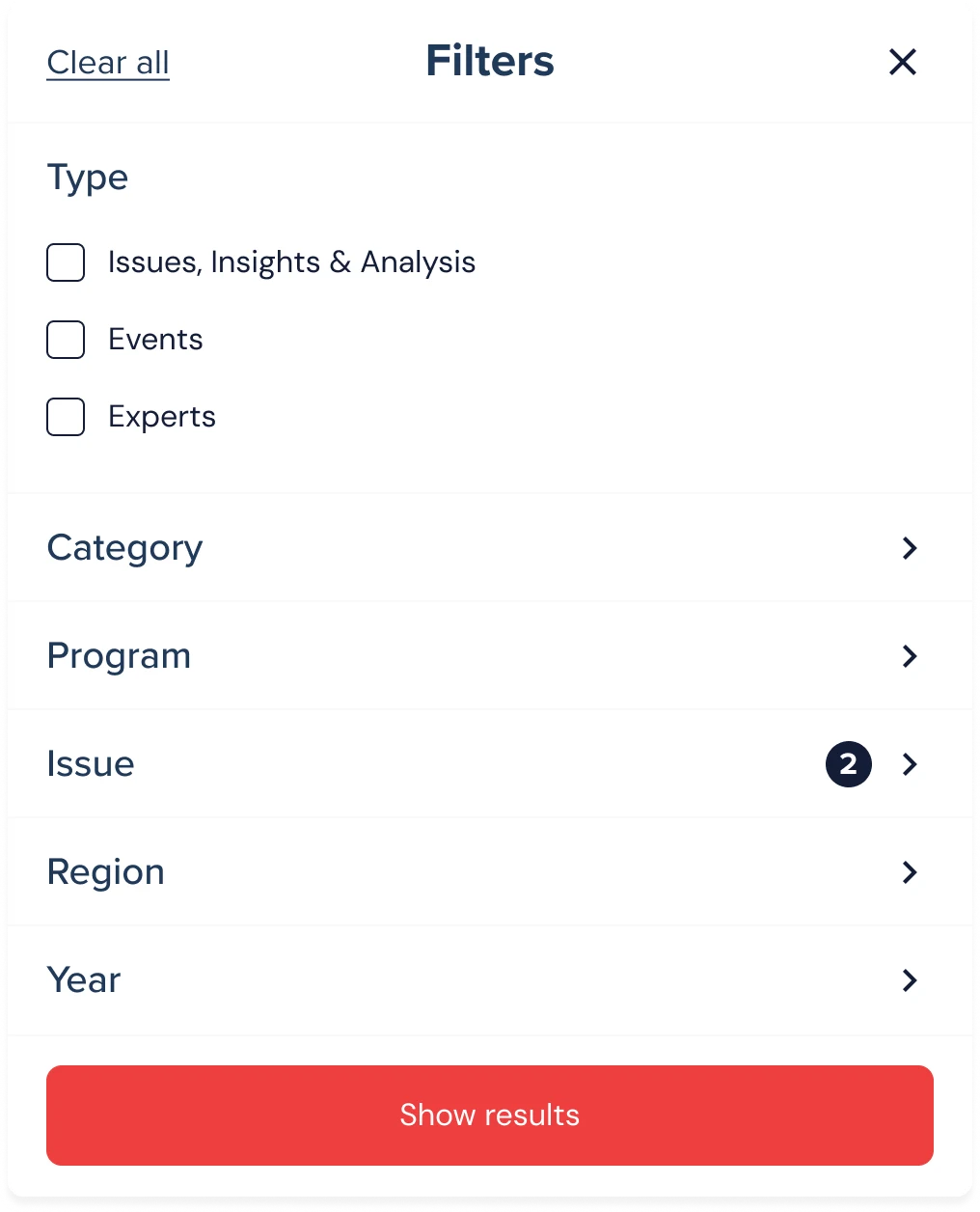
Type and Issue come first because that's how readers think about policy. Program, region and year are refinements fewer people reach for. The order came from what the archive holds and what people type into search.
The Issue row keeps a count of what's selected, so a reader can see why the results changed. I also designed a pill-cloud version of the issues; the grouped list shipped.
Learnings
What I'd do differently
Judge a taxonomy by the person applying it. A tidy scheme that editors skip gives worse search than a plainer one they always use.
Measure the filters. Which tags get used and which never do would turn the next restructure into an edit.
Name the problem in the pitch. Calling content structure the issue meant faster pages were never going to count as done on their own.
Where it is now
Live, retained, 70% faster
Pages load 70% faster, as Filter published. The taxonomy and the filters are still live, though Experts and Category have since come out of them, and Filter still looks after the site.
"They've stood out for their ability to listen, understand our needs, and translate them into thoughtful designs with fresh solutions."
Sarah Krajewski, Senior Program Officer, CEPA